
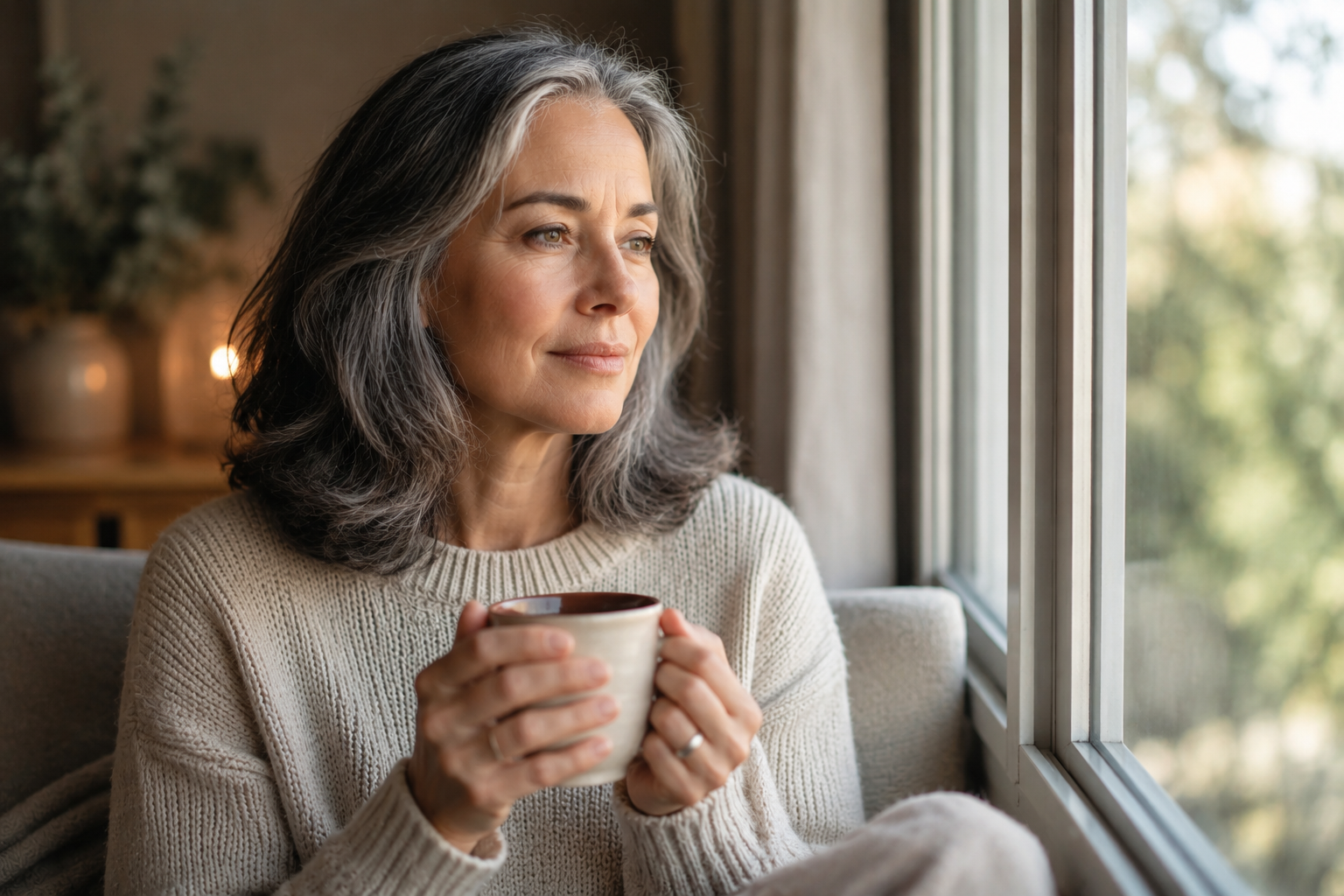
Perceiving the first perimenopause symptoms can be confusing. One day your period changes. The next, you forget a familiar word, wake up exhausted, or suddenly feel emotional for no obvious reason. Many women find themselves wondering whether it’s stress, aging, or something else entirely.
The truth is that perimenopause symptoms often begin years before menopause itself. Because they develop gradually and affect many different parts of the body, they can seem completely unrelated at first.
Understanding these changes is one of the most empowering steps you can take. In this guide, you’ll discover the 35 most common perimenopause symptoms, why they happen, when to seek medical advice, and—most importantly—why you’re not alone.
Why Do Perimenopause Symptoms Feel So Random?

One of the most confusing aspects of perimenopause symptoms is that they rarely appear in a predictable order.
Many women expect hot flashes to be the very first sign.
Instead, they may first notice anxiety, restless nights, brain fog, joint pain, or changes in their menstrual cycle. Some simply feel that their body doesn’t respond the way it used to.
This happens because hormone levels don’t decline in a straight line during perimenopause.
Instead, estrogen and progesterone fluctuate from month to month—and sometimes even from day to day.
These hormonal shifts affect far more than the reproductive system. They also influence the brain, sleep, metabolism, skin, muscles, bones, bladder, heart, and emotional well-being.
That’s why two women of the same age can have completely different experiences.
Quick Reassurance
Not every woman experiences all 35 symptoms—and that’s completely normal.
Perimenopause is a highly individual transition. Some women notice only a few subtle changes, while others experience a wider range of symptoms. Your journey is unique, and comparing yourself to others often creates unnecessary worry.
Not Every Woman Experiences the Same Symptoms
One of the most important things to remember is that there is no “right” way to experience perimenopause.
Some women notice only mild changes that barely interfere with daily life.
Others experience symptoms that significantly affect their sleep, mood, relationships, or quality of life.
Some never have hot flashes.
Others begin with anxiety, insomnia, or brain fog years before their menstrual cycle becomes irregular.
Your experience is unique.
Comparing yourself with friends, sisters, coworkers—or even your mother—can create unnecessary anxiety because every woman’s hormonal transition is different.
The goal isn’t to count how many perimenopause symptoms you have.
The goal is to recognize what your body is telling you and seek support whenever you need it.
Changes in Your Menstrual Cycle: The First Sign Many Women Notice
For many women, changes in the menstrual cycle are the first indication that perimenopause has begun.
Periods that were once predictable may suddenly become irregular.
The flow changes.
The timing changes.
Sometimes the bleeding seems completely unpredictable.
These changes occur because ovulation becomes less consistent during perimenopause, causing hormone levels to fluctuate from one cycle to the next.
1. Irregular Periods
Perhaps your period arrives a week earlier than expected.
The following month, it’s late.
Then it skips a month altogether before returning again.
These irregular cycles are among the most common perimenopause symptoms.
Although they’re usually a normal part of this transition, it’s important to speak with your healthcare provider if bleeding becomes unusually heavy, lasts much longer than usual, or occurs after menopause.
2. Heavier or Lighter Bleeding
Many women notice that their menstrual flow changes.
Some experience much heavier periods than they’ve ever had before.
Others find their periods becoming surprisingly light.
Both experiences are common because fluctuating hormone levels affect how the uterine lining builds up and sheds each month.
3. Shorter or Longer Cycles
Instead of having a cycle every 28 days, you may suddenly find yourself menstruating every 21 days.
Or perhaps five or six weeks pass before your next period arrives.
These variations are a common part of perimenopause and reflect the natural hormonal fluctuations taking place inside your body.
4. Spotting Between Periods
Light bleeding or spotting between periods can also occur during perimenopause.
Hormonal fluctuations are often responsible.
However, any unexpected vaginal bleeding should be evaluated by your healthcare provider to rule out other possible causes.
Changes in Your Brain and Memory: When Your Mind Doesn’t Feel Like It Used To
For many women, the cognitive changes of perimenopause symptoms can feel more unsettling than the physical ones.
You forget an appointment.
You walk into a room and can’t remember why.
A familiar word suddenly disappears in the middle of a conversation.
It’s easy to wonder whether something is seriously wrong.
Fortunately, there is a scientific explanation.
Estrogen plays an important role in memory, attention, learning, and communication between brain cells. As hormone levels fluctuate during perimenopause, temporary changes in cognitive function may occur.
This doesn’t mean you’re losing your intelligence.
And it certainly doesn’t mean you’re “losing your mind.”
For most women, these changes improve over time as the body adapts to this new stage of life.
5. Brain Fog

If there’s one symptom women mention again and again, it’s brain fog.
It isn’t true memory loss.
Instead, it feels as though your brain is working… just a little more slowly.
You walk into a room and suddenly forget why you went there.
You unlock your phone and can’t remember what you planned to do.
You look at a familiar object and need an extra second to remember its name.
For women who have always been organized and productive, this can be especially frustrating.
The reassuring news is that brain fog is one of the perimenopause symptoms that often improves with time.
6. Forgetfulness
“I’ve never been like this before.”
Healthcare professionals hear this sentence often.
You misplace your keys.
You forget where you parked your car.
You lose your train of thought halfway through a conversation.
Most of the time, this isn’t true memory loss.
It’s a temporary difficulty retrieving information.
Hormonal fluctuations, poor sleep, stress, and anxiety can all make these moments more frequent during perimenopause.
7. Difficulty Concentrating
You read the same page three times.
You start writing an email and suddenly forget what you wanted to say.
You begin one task…
…and a few minutes later, you’re doing something completely different.
If this sounds familiar, you’re not alone.
Many women describe feeling as though their attention wanders much more easily than it used to.
Tasks that once felt effortless may now require far greater concentration.
When sleep is disrupted, staying focused often becomes even more challenging.
8. Words Suddenly Disappear
This may be one of the most surprising perimenopause symptoms.
You know exactly what you want to say.
You remember the story.
You remember the actor.
You even remember scenes from the movie.
But the name simply won’t come.
The conversation often sounds something like this:
“Have you seen that movie?”
“You know… the one with that actor…”
“What’s his name again?”
“He was also in… oh goodness… that other movie…”
For a few moments, a name you’ve known for years completely disappears.
If this has happened to you, you’re in very good company.
Many women describe this exact experience during perimenopause.
Although this symptom is usually temporary, persistent or severe cognitive changes should always be discussed with a healthcare professional.
From Glaucia’s Practice
One woman came to my office looking deeply worried.
She quietly said,
“I’m afraid I might be developing Alzheimer’s disease.”
I asked what had made her think that.
She replied,
“I know exactly what I want to say… but sometimes the words simply disappear.”
As our conversation continued, she also mentioned that her menstrual cycle had become irregular.
She wasn’t sleeping well.
Hot flashes had recently started waking her during the night.
For the first time, she realized these weren’t isolated problems.
They were different pieces of the same puzzle.
By the end of our appointment, her fear had begun to give way to understanding.
Sometimes, knowing why something is happening doesn’t make every symptom disappear overnight.
But it can replace fear with reassurance.
And that is often the first step toward feeling like yourself again.
Changes in Mood: When You Don’t Feel Like Yourself Anymore
One sentence comes up again and again during perimenopause:
“I don’t feel like myself anymore.”
You still love your family.
You still care about your work.
You still enjoy spending time with the people who matter most.
But something inside feels different.
Small problems suddenly seem overwhelming.
Comments that never used to bother you now leave you feeling hurt.
Sometimes you just want to be alone.
Other times, tears come for no obvious reason.
These emotional changes can be frightening, especially when people around you say things like:
“You’re just stressed.”
“You need to relax.”
“You’re overreacting.”
But your feelings are real.
And they deserve understanding—not judgment.
During perimenopause, fluctuating hormone levels can influence neurotransmitters such as serotonin and dopamine, which help regulate mood, motivation, and emotional well-being.
For many women, emotional changes begin long before the first hot flash appears.
9. Mood Swings
You wake up feeling optimistic.
A few hours later, you feel like crying.
By evening, you’re laughing again.
These emotional ups and downs can happen without any obvious trigger.
It doesn’t mean you’re becoming emotionally unstable.
And it doesn’t mean you’re losing control.
For many women, mood swings are simply one of the ways perimenopause symptoms can affect the brain during this hormonal transition.
10. Irritability
Someone is chewing a little too loudly.
The dog won’t stop barking.
Your phone keeps buzzing.
A small interruption suddenly feels unbearable.
Many women describe it with one simple sentence:
“My patience disappeared.”
It’s important to remember that irritability is not your personality.
It’s often a temporary response to hormonal fluctuations, poor sleep, and the many physical and emotional changes happening at the same time.
Recognizing this can replace self-criticism with self-compassion.
11. Anxiety
For some women, anxiety appears for the very first time during perimenopause.
It may not feel like a panic attack.
Instead, it’s a constant feeling of uneasiness.
A sense that something bad is about to happen.
Your heart races.
Your mind won’t slow down.
You struggle to relax, even when everything around you seems fine.
If you’ve never experienced anxiety before, these sensations can feel especially frightening.
The reassuring news is that you’re not alone, and effective treatments and coping strategies are available.
12. Crying More Easily
A touching commercial brings tears to your eyes.
A heartfelt message from your child makes you cry.
A beautiful story suddenly feels overwhelming.
Many women notice they become emotionally more sensitive during perimenopause.
This isn’t weakness.
And it doesn’t mean you’re “too emotional.”
It’s another way hormonal changes may influence emotional regulation during this stage of life.
13. Feeling Overwhelmed
This may be one of the least discussed—but most common—perimenopause symptoms.
Your responsibilities haven’t changed.
But suddenly they feel much heavier.
You look at your to-do list…
…and wonder how you’ll possibly get through the day.
Even while you’re resting, your mind seems unable to switch off completely.
This feeling often results from a combination of hormonal changes, disrupted sleep, emotional stress, and the many responsibilities women carry during midlife.
You deserve compassion—not criticism.
From Glaucia’s Practice
One woman came to my office feeling discouraged.
She looked at me and said,
“I’ve always been a patient person. Lately, the smallest things make me irritated… and afterward, I feel guilty.”
As we talked, she realized that irritability wasn’t the only change she had noticed.
Her sleep had become lighter.
Hot flashes were waking her several times each night.
Her menstrual cycle had become unpredictable.
Little by little, she began to see the bigger picture.
A few weeks later, she returned for a follow-up appointment with a smile on her face.
She said something I’ve never forgotten:
“I thought I’d become a different person.”
“Now I realize I’m still me. I’m simply going through a stage that requires a little more kindness toward myself.”
I couldn’t have said it better.
Sometimes, the greatest relief doesn’t come from making every symptom disappear.
It comes from understanding that you haven’t lost yourself.
You’re navigating a natural transition—and you deserve the same compassion you so freely offer to everyone else.
Changes in Sleep and Energy: When Rest No Longer Feels Restorative
Sleep is supposed to restore your body and mind.
Yet for many women during perimenopause, the opposite seems to happen.
You go to bed exhausted.
You sleep.
You wake up…
…and still feel tired.
Some women struggle to fall asleep.
Others wake in the middle of the night and can’t drift back to sleep.
Then morning comes.
Work.
Family.
Responsibilities.
Life keeps moving, even when your energy doesn’t.
This isn’t laziness.
It isn’t a lack of motivation.
And in many cases, it isn’t simply a matter of getting older.
Hormonal changes during perimenopause can affect both the quality and the architecture of sleep, influencing memory, concentration, mood, metabolism, and overall well-being.
14. Insomnia
You climb into bed feeling exhausted.
You close your eyes.
But sleep refuses to come.
Or perhaps you fall asleep easily…
…only to wake up a few hours later, unable to return to sleep.
Insomnia is one of the most common perimenopause symptoms.
Hormonal fluctuations may play an important role, but anxiety, night sweats, and hot flashes can also contribute.
When poor sleep continues night after night, it can significantly affect your quality of life.
15. Waking Up in the Middle of the Night
There is one time that countless women mention.
Three o’clock in the morning.
You open your eyes.
3:07.
3:21.
3:46.
You sigh.
“Not again…”
The house is quiet.
Everyone else is asleep.
But your mind is suddenly wide awake.
You start thinking about tomorrow’s schedule.
Your family.
Your work.
The bills you need to pay.
Everything that still needs to be done.
The harder you try to fall asleep…
…the more awake you become.
If this sounds familiar, please know you’re far from alone.
16. Waking Up Tired Even After Sleeping
Maybe you slept seven or even eight hours.
Yet you wake up feeling as though you barely rested.
Your body feels heavy.
Your mind feels sluggish.
Simple tasks require much more effort than they once did.
Sometimes the problem isn’t how many hours you sleep.
It’s the quality of that sleep.
17. Constant Fatigue

Some kinds of tiredness disappear after a relaxing weekend.
This isn’t that kind of fatigue.
Many women describe feeling as though their internal battery never fully recharges.
It’s more than sleepiness.
It’s an ongoing lack of physical and mental energy.
Although hormonal changes may contribute, persistent fatigue should always be discussed with your healthcare provider.
Other conditions—such as thyroid disorders, anemia, vitamin deficiencies, or sleep disorders—can cause similar symptoms and deserve proper evaluation.
18. Losing Energy for Activities You Once Enjoyed
This can be one of the most difficult changes to accept.
You used to enjoy meeting friends.
Going for walks.
Traveling.
Reading.
Trying new restaurants.
Now, simply getting ready to leave the house feels exhausting.
It doesn’t necessarily mean you’ve stopped enjoying those activities.
Sometimes it simply means your body needs more rest than it once did.
Respecting that need isn’t giving up.
It’s practicing self-care.
From Glaucia’s Practice
One woman once shared something with me that I’ve never forgotten.
She looked at me and said,
“The problem isn’t that I’m tired.”
“The problem is that I never seem to recover.”
She slept.
She rested on weekends.
She even tried slowing down whenever she could.
Yet every morning, she woke up feeling as though her battery was still nearly empty.
As we looked at the bigger picture together, a pattern became clear.
Her sleep was interrupted several times each night.
Hot flashes were becoming more frequent.
Her menstrual cycle had become irregular.
And little by little, fatigue had become part of her daily life.
Understanding that didn’t make her exhaustion disappear overnight.
But it gave her something she desperately needed.
She stopped blaming herself.
Sometimes, that’s where healing begins—not by pushing yourself harder, but by understanding what your body has been trying to tell you all along.
Physical Changes: When Your Body Begins to Feel Different

Perimenopause doesn’t affect only your hormones.
It can influence nearly every system in your body.
Some changes happen gradually.
Others seem to appear overnight.
Your clothes fit differently.
Your skin feels drier.
Your hair loses volume.
Your joints become stiff.
Many women find themselves asking,
“I’m doing everything the same… so why does my body feel so different?”
It’s an understandable question.
And the answer isn’t simply diet or exercise.
During perimenopause, fluctuating hormone levels influence metabolism, muscle mass, fat distribution, collagen production, and the way your body uses energy.
That means physical changes can happen even if your lifestyle hasn’t changed at all.
Most importantly, these changes are not a sign that your body is failing you.
They’re part of a natural biological transition.
Understanding them can replace frustration with self-compassion.
19. Weight Gain Around the Midsection
This is one of the most frustrating perimenopause symptoms for many women.
You haven’t changed the way you eat.
You’re still active.
Yet your favorite jeans suddenly fit differently.
Weight seems to settle around your waist more easily than it used to.
Many women immediately blame themselves.
In reality, hormonal changes during perimenopause can alter the way fat is distributed throughout the body, making abdominal weight gain more common.
That doesn’t mean weight gain is inevitable.
Healthy eating, regular physical activity, strength training, restorative sleep, and stress management can all make a meaningful difference.
But just as important…
You deserve to let go of unnecessary guilt.
20. Difficulty Losing Weight
Many women notice that the strategies which worked for years suddenly stop working.
You cut back on sweets.
You walk more.
You eat smaller portions.
Yet the scale barely moves.
Part of the explanation is that metabolism naturally slows with age.
At the same time, women gradually lose muscle mass, reducing the number of calories the body burns at rest.
This is one reason why strength training becomes especially valuable during midlife.
Rather than focusing only on weight, think about building strength, protecting your bones, and supporting your long-term health.
21. Joint Aches and Stiffness
You wake up…
…and your knees feel stiff.
Your fingers ache when you make your first cup of coffee.
Your shoulders seem sore for no obvious reason.
Joint discomfort isn’t usually the first symptom women associate with perimenopause.
Yet it’s surprisingly common.
Estrogen helps support healthy joints and connective tissues.
As hormone levels fluctuate, some women notice increased stiffness or discomfort.
However, persistent or severe joint pain should always be evaluated by a healthcare professional to rule out other possible causes.
22. Dry Skin
The moisturizer you’ve loved for years suddenly doesn’t seem to work anymore.
Your skin feels tighter.
Drier.
Sometimes even more sensitive than before.
Estrogen plays an important role in collagen production and skin hydration.
As hormone levels decline, these natural changes become more noticeable.
Taking care of your skin during this stage isn’t simply about appearance.
It’s about comfort, health, and feeling good in your own body.
23. Hair Thinning
Brushing your hair and noticing more strands than usual can feel unsettling.
For some women, the change is subtle.
For others, hair gradually loses fullness over time.
Hormonal fluctuations may affect the normal hair growth cycle.
However, hair thinning isn’t always caused by perimenopause.
Iron deficiency, thyroid disorders, nutritional deficiencies, and other medical conditions can also contribute.
If hair loss becomes significant or persistent, it’s worth discussing it with your healthcare provider.
From Glaucia’s Practice
One woman once looked at me and quietly said,
“I’m still the same woman… but sometimes it feels as though my body doesn’t recognize me anymore.”
Her words stayed with me.
She wasn’t talking only about weight.
She was talking about looking in the mirror and struggling to recognize the changes she saw.
As our conversation unfolded, something beautiful happened.
Instead of asking,
“Why is my body doing this to me?”
She began asking,
“How can I take better care of my body during this new stage of life?”
It may sound like a small shift.
But sometimes changing the question changes everything.
When we stop seeing our bodies as the enemy…
…we begin to treat them with the kindness they’ve been asking for all along.
Intimate and Sexual Health: A Conversation Every Woman Deserves to Have
For many years, women’s sexual health was treated as something people simply didn’t talk about.
Some women grew up believing that pain during sex was something they just had to endure.
Others assumed that losing sexual desire was simply part of getting older.
But neither belief tells the whole story.
Your intimate health remains an important part of your overall well-being at every stage of life.
Feeling comfortable.
Feeling connected.
Feeling pleasure.
Feeling close to your partner.
These things continue to matter.
As estrogen levels change during perimenopause, the vaginal tissues, bladder, and surrounding structures change as well.
Understanding these changes allows women to seek solutions instead of silently accepting discomfort.
24. Vaginal Dryness
This is one of the most common—yet least discussed—perimenopause symptoms.
Many women notice that natural lubrication gradually decreases.
They may experience dryness.
Irritation.
Or increased sensitivity.
These changes happen because estrogen helps keep the vaginal tissues healthy, elastic, and well lubricated.
The reassuring news is this:
Vaginal dryness doesn’t mean your body has stopped working.
It simply means your body has different needs now.
25. Pain During Sex
When vaginal tissues become dry, intimacy may become uncomfortable.
Some women describe friction.
Others describe burning.
Others experience pain that makes them avoid intimacy altogether.
Unfortunately, many suffer in silence because they believe discomfort is simply part of aging.
It isn’t.
Pain during sex deserves attention.
Simple measures—such as using an appropriate lubricant—or treatments recommended by your healthcare provider can often make intimacy comfortable again.
26. Lower Sex Drive
This may be one of the most emotionally challenging perimenopause symptoms.
Many women tell me,
“I still love my partner.”
“I still find him attractive.”
“I just don’t feel the same desire I used to.”
There are many possible reasons for this.
Hormonal changes may play a role.
So can poor sleep.
Stress.
Fatigue.
Pain during intimacy.
Emotional well-being.
Sexual desire is influenced by much more than hormones alone.
There is no single experience that applies to every woman.
27. Increased Urinary Urgency
Some women suddenly notice they need to use the bathroom much more often.
Others experience a strong urge to urinate that seems to come out of nowhere.
Hormonal changes may contribute by affecting the bladder and the tissues that support it.
However, urinary symptoms can have many possible causes.
If they become persistent—or are accompanied by pain, burning, or fever—it’s important to seek medical evaluation.
28. More Frequent Urinary Tract Infections
If urinary tract infections suddenly become more frequent during midlife, hormonal changes may be one contributing factor.
Lower estrogen levels can affect the balance of healthy bacteria and reduce some of the body’s natural defenses in the urinary tract.
Fortunately, there are effective ways to reduce the risk.
Your healthcare provider can help determine the most appropriate strategy based on your individual situation.
From Glaucia’s Practice
Over the years, I’ve had many women tell me how perimenopause changed the way they experienced intimacy.
One conversation has stayed with me.
A woman looked at me and quietly said,
“I thought I had lost my sexuality.”
She had begun avoiding intimacy because she was afraid it would hurt.
The more she avoided it…
…the greater her anxiety became.
As we talked, she and her partner began having more open conversations.
Together, they realized her body hadn’t stopped responding.
It had simply changed.
Instead of rushing, they slowed down.
There was more affection.
More patience.
More listening.
When appropriate, they also began using a lubricant recommended by her healthcare provider.
Little by little, her body responded differently.
Her confidence returned.
And intimacy once again became a source of comfort, pleasure, and connection.
Before leaving my office, she smiled and said something I’ve never forgotten:
“I didn’t lose my sexuality.”
“I just needed to learn my body again.”
Those words beautifully capture what so many women discover during this stage of life.
Perimenopause doesn’t take away your femininity.
It invites you to understand your body in a new way—and to treat it with the patience and kindness it deserves.
Less Common Perimenopause Symptoms: The Signs Few Women Expect
When most people think about perimenopause symptoms, they immediately think of irregular periods and hot flashes.
But hormonal changes can affect many other parts of the body.
Some symptoms are so unexpected that women spend months wondering what is happening—without realizing they may all be connected to the same transition.
That doesn’t mean every new symptom should automatically be blamed on hormones.
It simply means that understanding these lesser-known changes can help you recognize patterns and have more informed conversations with your healthcare provider.
📷 IMAGE 7 – Unexpected Symptoms (600 × 400)
Filename: unexpected-perimenopause-symptoms.jpg
Alt text: Woman thoughtfully touching her face while reflecting on unexpected symptoms of perimenopause, such as palpitations, itchy skin, or ringing in the ears.
29. Heart Palpitations
Your heart suddenly begins beating faster.
You’re sitting quietly.
You haven’t been exercising.
Yet your heartbeat feels stronger or more noticeable than usual.
This experience can be frightening.
Hormonal fluctuations may contribute to occasional palpitations during perimenopause.
However, heart palpitations can have many different causes.
If they become frequent, severe, or are accompanied by chest pain, dizziness, or fainting, seek medical attention promptly.
30. Ringing in the Ears
Some women notice a ringing, buzzing, or humming sound in one or both ears during midlife.
While tinnitus has many possible causes, some women report noticing it around the same time that other perimenopause symptoms begin.
If the ringing persists or becomes bothersome, discuss it with your healthcare provider.
31. Itchy Skin
Have you ever felt an intense urge to scratch your arms…
…your legs…
…or your back…
…only to find nothing there?
No rash.
No insect bite.
No obvious irritation.
As estrogen levels change, the skin may become drier and more sensitive, making itching more noticeable for some women.
Keeping the skin moisturized and using gentle skincare products may help improve comfort.
32. Tingling Sensations
Some women describe brief tingling or “pins and needles” sensations in different parts of the body.
Although this isn’t among the most common perimenopause symptoms, it has been reported by some women during this transition.
If these sensations become persistent, severe, or are accompanied by muscle weakness or other neurological symptoms, they should always be evaluated by a healthcare professional.
33. Changes in Taste or Smell
Foods you’ve always enjoyed suddenly taste different.
A favorite perfume seems much stronger than before.
Certain smells become unpleasant for no clear reason.
Although these changes don’t affect every woman, some notice temporary alterations in taste or smell during perimenopause.
34. Dry Mouth or Burning Mouth Sensation
You drink water…
Yet your mouth still feels unusually dry.
Some women also describe a burning sensation affecting the tongue, lips, or roof of the mouth.
Several conditions can contribute to these symptoms, including hormonal changes.
If they persist, talk with your healthcare provider to help identify the underlying cause.
35. Hot Flashes and Night Sweats
Ironically, the symptom most people associate with perimenopause isn’t always the first one to appear.
Hot flashes often come without warning.
A sudden wave of heat spreads across your face, neck, and chest.
Within moments, you may begin sweating heavily.
At night, these episodes can interrupt sleep, leaving your pajamas and bed sheets damp.
Every woman’s experience is different.
Some experience only occasional hot flashes.
Others have several episodes each day.
If hot flashes begin interfering with your sleep or daily life, there are effective treatment options worth discussing with your healthcare provider.
From Glaucia’s Practice
One woman came into my office with a nervous smile and said,
“I think my body has gone completely crazy.”
One day she felt a sudden wave of heat.
The next day, her heart raced for no apparent reason.
Sometimes her skin itched intensely.
Other nights, she woke up drenched in sweat.
She had already undergone several medical evaluations.
Fortunately, no serious medical condition had been found.
As we talked, something important became clear.
These symptoms weren’t random.
They weren’t isolated.
They were different expressions of the same hormonal transition.
For the first time in months, she stopped looking at each symptom separately and began seeing the whole picture.
And with that understanding came something she hadn’t felt in a long time.
Relief.
Sometimes, that’s one of the greatest gifts knowledge can offer.
When Should You Talk to Your Healthcare Provider?
Recognizing perimenopause symptoms can be incredibly reassuring.
For many women, it’s the moment when scattered experiences finally begin to make sense.
At the same time, it’s important to remember that not every symptom should automatically be attributed to hormonal changes.
Your health deserves careful attention at every stage of life.
Consider scheduling an appointment with your healthcare provider if:
- Your menstrual bleeding becomes unusually heavy or lasts much longer than usual.
- Your symptoms begin interfering with your sleep, work, relationships, or daily activities.
- Anxiety, sadness, or mood changes become overwhelming.
- You’re concerned about changes that don’t seem typical for you.
- You’d like guidance about treatment options or healthy lifestyle strategies during perimenopause.
Seeking medical advice isn’t simply about receiving a diagnosis.
It’s an opportunity to discuss your symptoms, protect your long-term health, and create a plan that fits your individual needs.
You don’t have to navigate perimenopause alone.
Evidence Snapshot
Current research shows that perimenopause may begin several years before menopause itself, and every woman’s experience is different.
Some women notice only subtle changes.
Others experience symptoms that significantly affect sleep, mood, memory, energy, and quality of life.
Research also shows that many perimenopause symptoms can be successfully managed through individualized care.
The most appropriate approach depends on your medical history, your symptoms, and your personal preferences.
There is no single solution that works for everyone.
Key Takeaway
Not every woman experiences all 35 symptoms of perimenopause.
Some women notice only a few subtle changes.
Others experience a wider range of symptoms.
Neither experience is more “normal” than the other.
Understanding your body—and seeking support when needed—is one of the most powerful ways to navigate this transition with confidence.
Quick Checklist
As you finish reading this guide, take a moment to reflect.
Have you noticed changes in:
☐ Your menstrual cycle?
☐ Your sleep?
☐ Your energy levels?
☐ Your memory or concentration?
☐ Your mood?
☐ Your body?
☐ Your intimate or sexual health?
If several of these changes sound familiar, consider discussing them with your healthcare provider.
Understanding what’s happening is often the first step toward feeling better.
A Moment of Self-Care

If there’s one message I hope you take away from this article, it’s this:
Be kind to yourself.
For generations, many women went through perimenopause believing they were overreacting…
…losing control…
…or simply “getting older.”
Today, we know better.
Your body is going through an important biological transition.
It deserves patience.
It deserves understanding.
It deserves care.
And so do you.
Some days you’ll feel energetic.
Other days you’ll need extra rest.
Neither day defines who you are.
Listening to your body isn’t weakness.
It’s wisdom.
Frequently Asked Questions
1. What are usually the first signs of perimenopause?
For many women, the first signs include changes in the menstrual cycle, brain fog, sleep disturbances, mood changes, or anxiety. Every woman’s experience is different.

2. Can you have perimenopause symptoms even if your periods are still regular?
Yes. Hormonal fluctuations can begin years before menstrual cycles become noticeably irregular.
3. How long does perimenopause usually last?
Perimenopause commonly lasts several years, although the duration varies considerably from one woman to another.
4. Are all 35 symptoms likely to happen to every woman?
No. Some women experience only a handful of symptoms, while others notice many more. There is no “normal” number of symptoms.
5. Can lifestyle changes help reduce perimenopause symptoms?
Many women benefit from regular exercise, quality sleep, stress management, balanced nutrition, and working closely with their healthcare provider to find an individualized approach.
6. When should I seek medical advice?
You should speak with your healthcare provider whenever symptoms interfere with your daily life, if bleeding becomes unusually heavy or prolonged, or if you have concerns about any new or persistent symptom.
Our Commitment to You
Every article on this website is created with one purpose:
To provide women with reliable, evidence-based information presented with compassion, clarity, and respect.
Our content is designed to educate—not replace—the relationship between you and your healthcare provider.
If this article helped you better understand your body, then it has fulfilled its purpose.
Scientific References
References will be included in the final published version following the same format used throughout the website.
Medical Review
Last medically reviewed: July 2026
This article is reviewed regularly to reflect current scientific evidence and clinical guidelines.
With care,
Glaucia
“Understanding your body is one of the greatest acts of self-care.”